Three charged for attack on Hong Kong bookseller
銅鑼灣書店潑漆案,檢方起訴三嫌
那天去銅鑼灣書店逛逛,老闆就是一個很一般的老先生而已,你來了,他沒要討好你,你走了,他也沒要挽留你。有一本書在架上找不到,問他,他說「沒有。」我說「沒有?」他說「沒有。」就是這麼直白,還有什麼好問呢。
Prosecutors on Thursday indicted three men who allegedly splashed red paint on Lam Wing-kee (林榮基), founder of Hong Kong's Causeway Bay Books, in Taipei earlier this year.
檢方在星期四正式起訴三名涉嫌對台北銅鑼灣書店老闆林榮基潑撒紅漆之犯嫌。
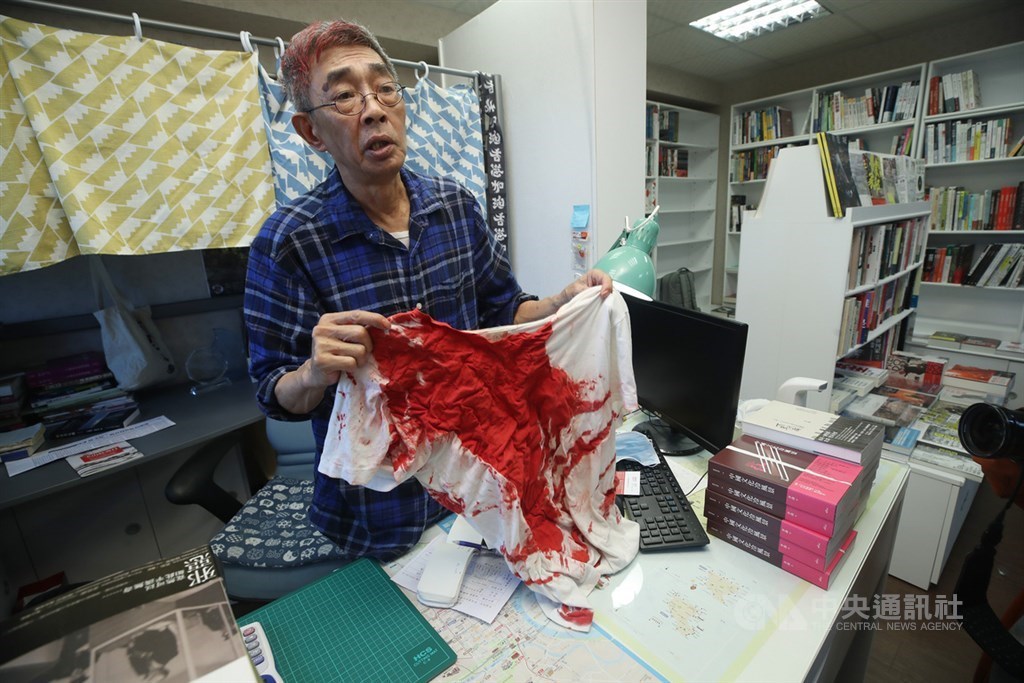
Lam, who fled to Taiwan amid fears of Chinese persecution, was attacked on April 21 as he ate breakfast at a coffee shop in Taipei's Zhongshan District, just days before opening his new bookshop in the city.
香港銅鑼灣書店老闆林榮基為了躲避中共追捕,搬遷至台灣,並且在台北重新開張書店。而就在書店開幕前4天,林榮基於今年4月21日在台北市中山區一家咖啡店用早餐時,遭到歹徒潑漆攻擊。
The Taipei City Prosecutors Office charged the three suspects in the attack -- a 51-year-old man surnamed Cheng (鄭) and two brothers aged 33 and 27 surnamed Tseng (曾) -- with causing bodily injury, coercion, public insult and damages.
台北地檢署以傷害、強制、公然侮辱及毀損等罪名,共起訴三名可疑犯嫌,分別是51歲的鄭男,以及33歲與27歲的曾姓兄弟。
Prosecutors allege that Cheng, who lives in Kaohsiung, was angered by Lam's pro-democracy and human rights advocacy in Hong Kong and conceived the attack after learning that he planned to reopen his Causeway Bay Books on April 25 in Taipei.
北檢指出,家住高雄的鄭嫌,長期對林榮基親民主派的人權主張感到不滿,在得知林將於今年4月25日於台北重新開張銅鑼灣書店後,便開始預謀犯案。
After finding photos of Lam and the address of his new bookstore online, Cheng sought help from the Tseng brothers and the three men traveled to Taipei on April 20.
鄭嫌夥同曾姓兄弟,在4月20日搭車北上,循著林榮基之個人相片與書店地址來到犯案現場。
The following morning, the suspects spotted him on the terrace of a coffee shop near his bookstore, and splashed him with red paint before fleeing, prosecutors said.
檢方表示,犯嫌隔日上午,在書店附近的咖啡店外發現林榮基身影,隨即上前潑灑紅漆並迅速逃逸。
All three men were arrested in Kaohsiung on April 22, but were released on bail after the Taipei District Court turned down a request by Taipei City Prosecutors Office to detain and hold them incommunicado, citing insufficient evidence that the suspects were a flight risk or would collude with others.
三名嫌犯於4月22日在高雄遭逮,但檢方聲請羈押遭到台北地方法院駁回,認定犯嫌無逃亡串共之虞,令交保候傳。 但台北地方法院認定嫌犯無逃亡串共之虞,駁回檢方的羈押聲請,令犯嫌交保候傳。(2020/9/15修)
Lam's original bookstore in Hong Kong, which sold books critical of China's leadership, was closed in 2016 after he and several of the store's shareholders disappeared into Chinese custody.
香港銅鑼灣書店因曾販賣政治敏感書籍,遭到中共政府打壓並拘捕老闆林榮基與其他書店合夥人,書店因此在2016年歇業。
His Taipei bookstore, located on the 10th floor of a commercial building near the Zhongshan MRT station, opened on April 25, with Taiwanese political figures, including President Tsai Ing-wen (蔡英文) and Legislative Yuan Speaker You Si-kun (游錫堃) in attendance.
近期重新開張的台北銅鑼灣書店,坐落於靠近捷運中山站附近的一棟商業大樓10樓,包含總統蔡英文、立法院長游錫堃等政治要角都曾光臨。
note:
- indict /ɪnˈdaɪt/ "C" 不發音! sue 告, accuse 控訴, indict 起訴
- with…(someone) in attendance
- conceive the attack
- released on bail
- insufficient evidence
- collude with
留言